

Write the recipe once.
List what goes in, how much, and how much you expect to lose. One recipe can make more than one product, with the cost split between them.
For small food producers
You make what you sell, and right now that takes a spreadsheet for recipes, another for stock, an accounting package and a till. Eleo keeps the recipe, the batch, the stock, the supplier order, the sale and your accounts in one set of records.
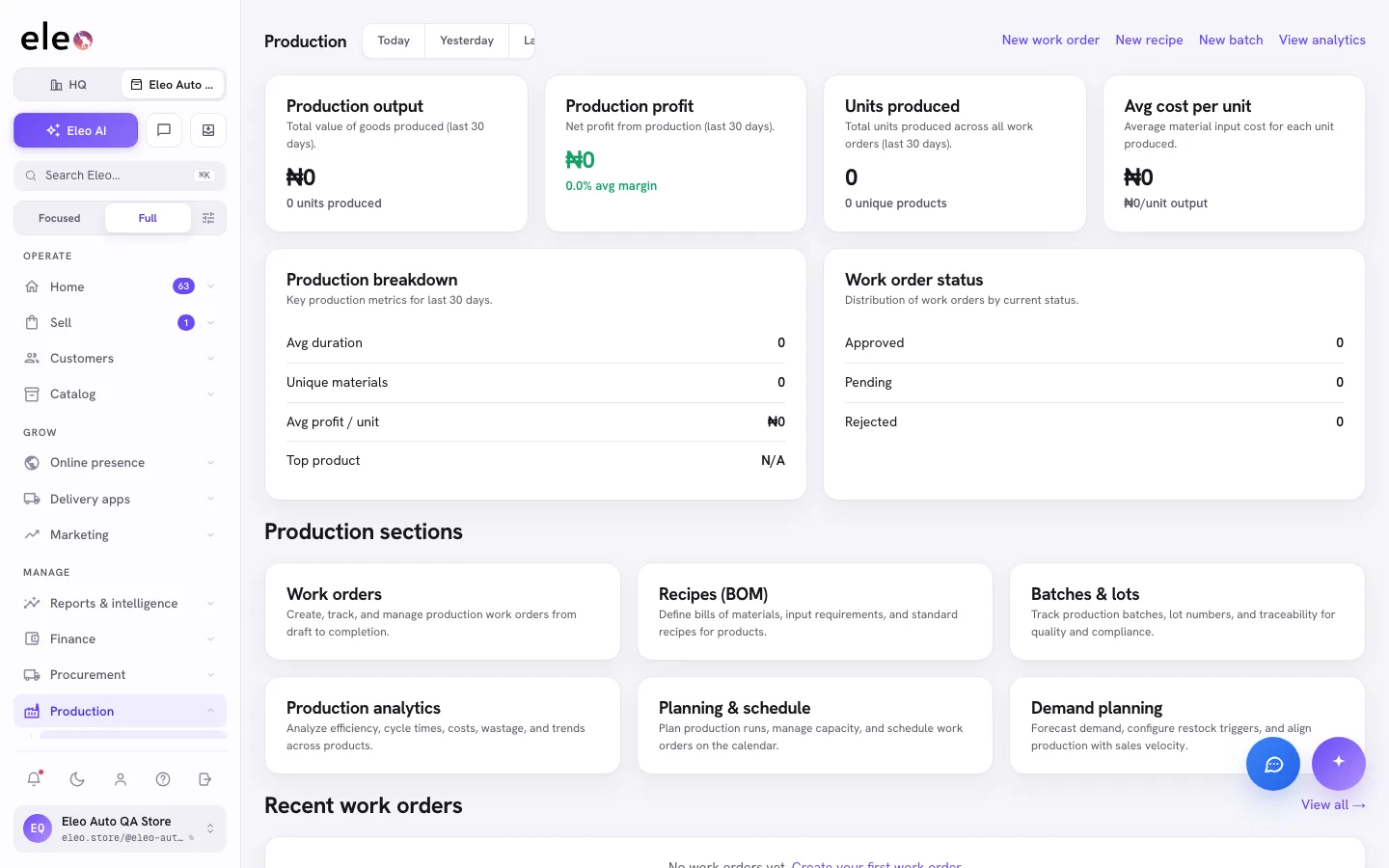
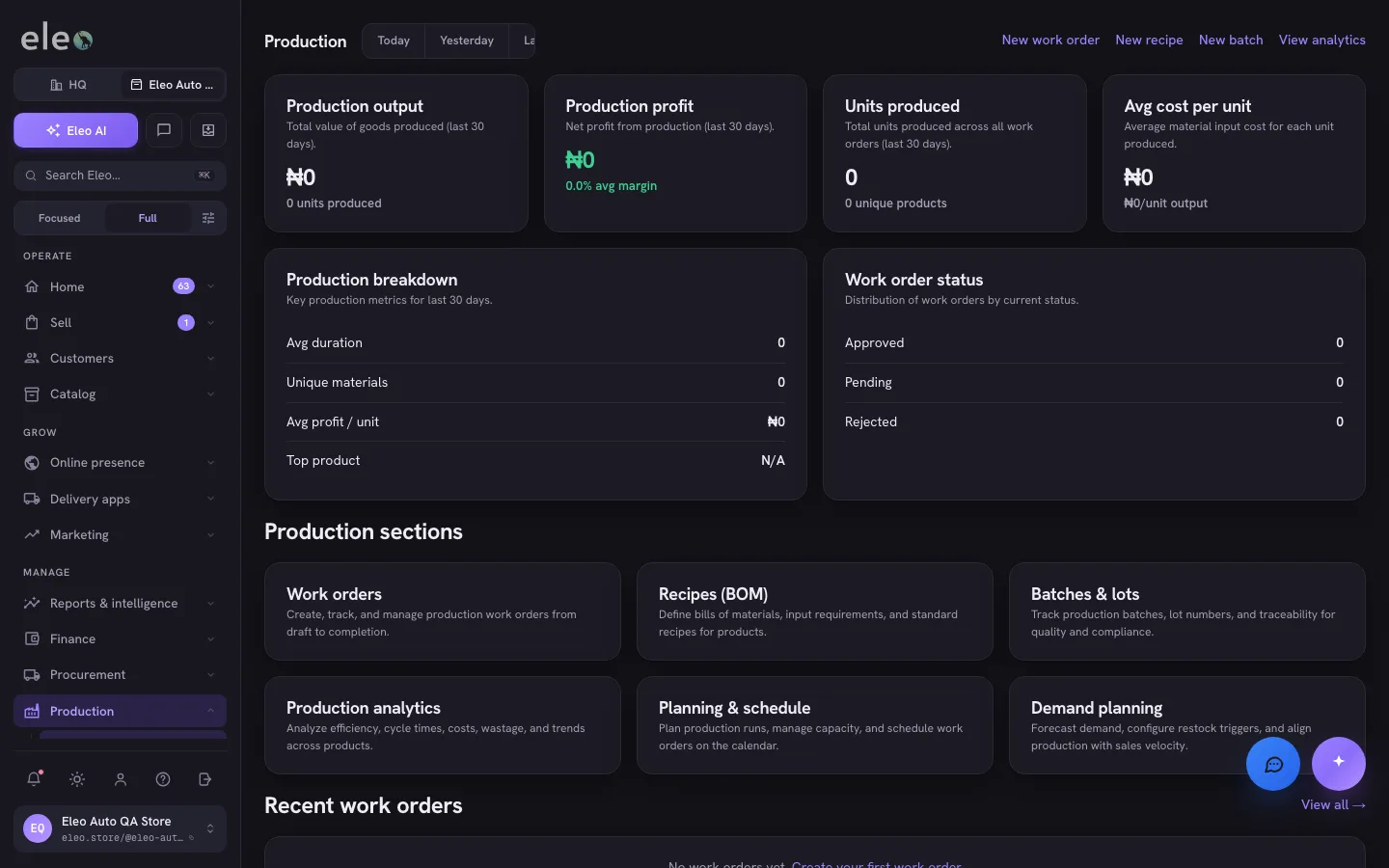
A real Eleo screen, from a demo store.
01 — What it does
Built for kitchens, bakeries and small factories that make, pack and sell their own products.
List what goes in, how much, and how much you expect to lose. One recipe can make more than one product, with the cost split between them.
Create a work order for a quantity. Eleo checks the ingredients are in stock before anyone starts, then takes them out and puts the finished goods in when the batch is done.
Each finished batch gets its own number and use-by date and remembers which ingredient batches went into it, so you can follow a problem forwards or backwards.
Each batch shows what it should have cost and what it did cost: ingredients, labour, overheads and waste, down to one unit.
Order from suppliers, receive what arrives in full or in part, check the invoice, and spread shipping and duties across the products they came with.
Every sale, supplier bill and expense is recorded in your accounts as it happens. Profit and loss, balance sheet and cash flow come from the same entries.
02 — A week at a sauce maker
A small sauce maker sells jars of chilli sauce through its own shop, its website and to a few local shops. This is one week of one product.
Fifty kilograms of chillies arrive from the grower, with a batch number. The manager receives the supplier order in Eleo and adds the courier charge, which is spread across the delivery.
The cook opens a work order for 400 jars. Eleo confirms the chillies, vinegar, sugar and jars are in stock and sets them aside for this batch.
Twelve jars fail the seal check and are recorded as waste with the reason. A temperature check passes. The batch finishes with 388 jars, a batch number and a use-by date.
Jars sell at the shop counter and on the website. Each sale takes the earliest-dated jars first and is written into the accounts with what the jar cost to make.
A shop asks which chillies went into the jars it bought. The owner opens the batch and sees the grower's batch number in one step.
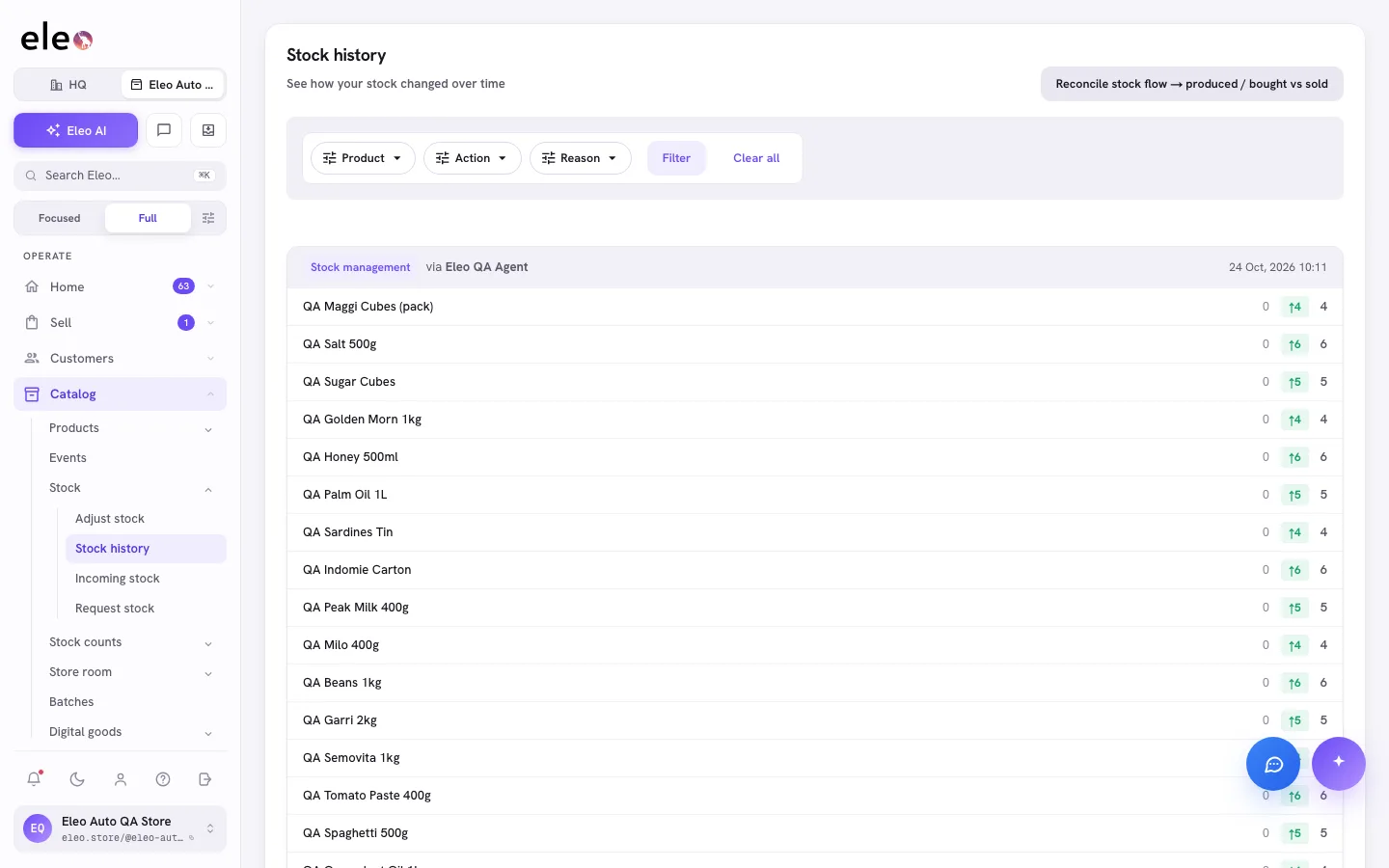
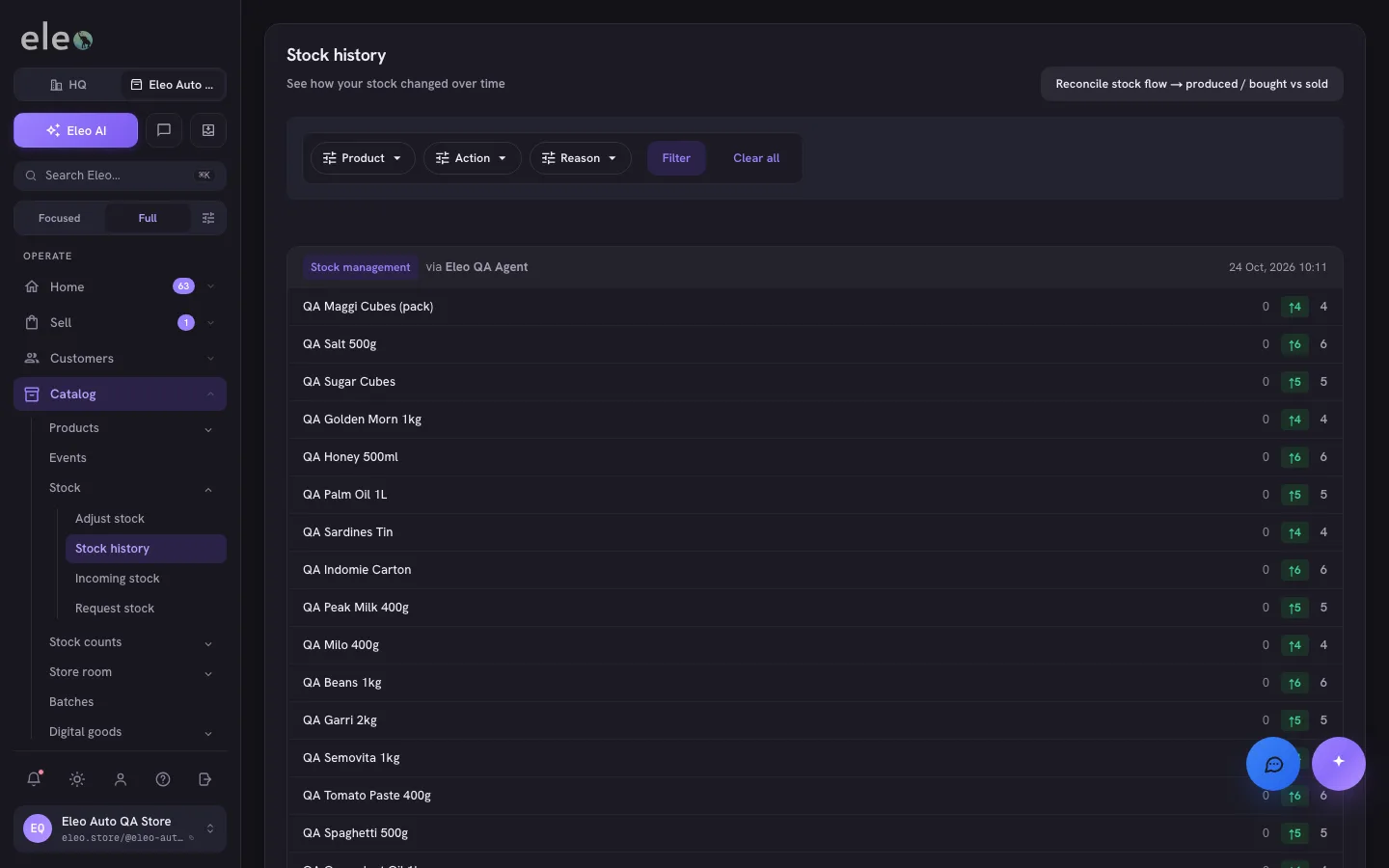
A real Eleo screen, from a demo store.
03 — After the batch
The cost of each batch flows into what each sale cost you, so profit and loss shows the real margin on the things you make, not a guess from last year's spreadsheet.
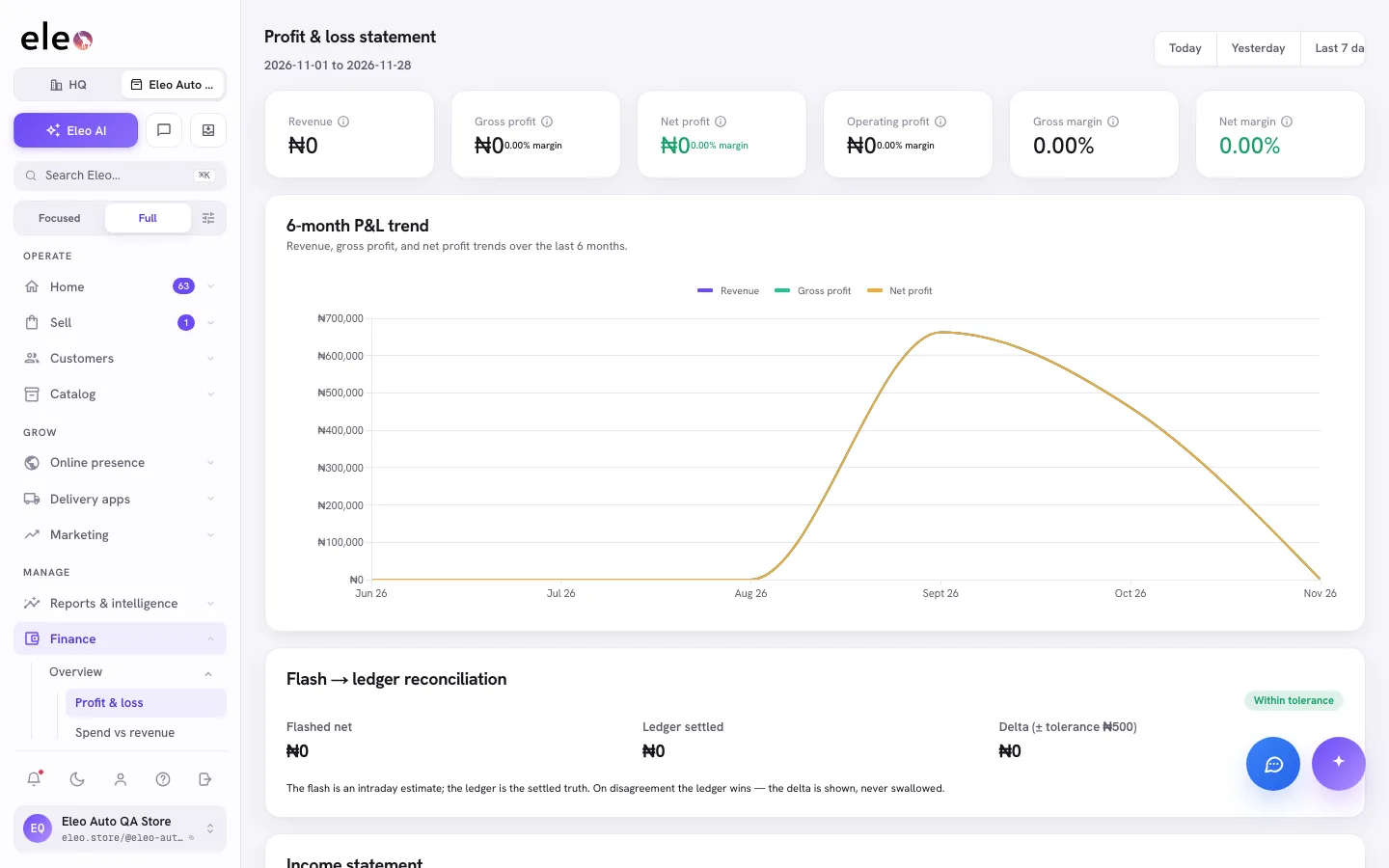
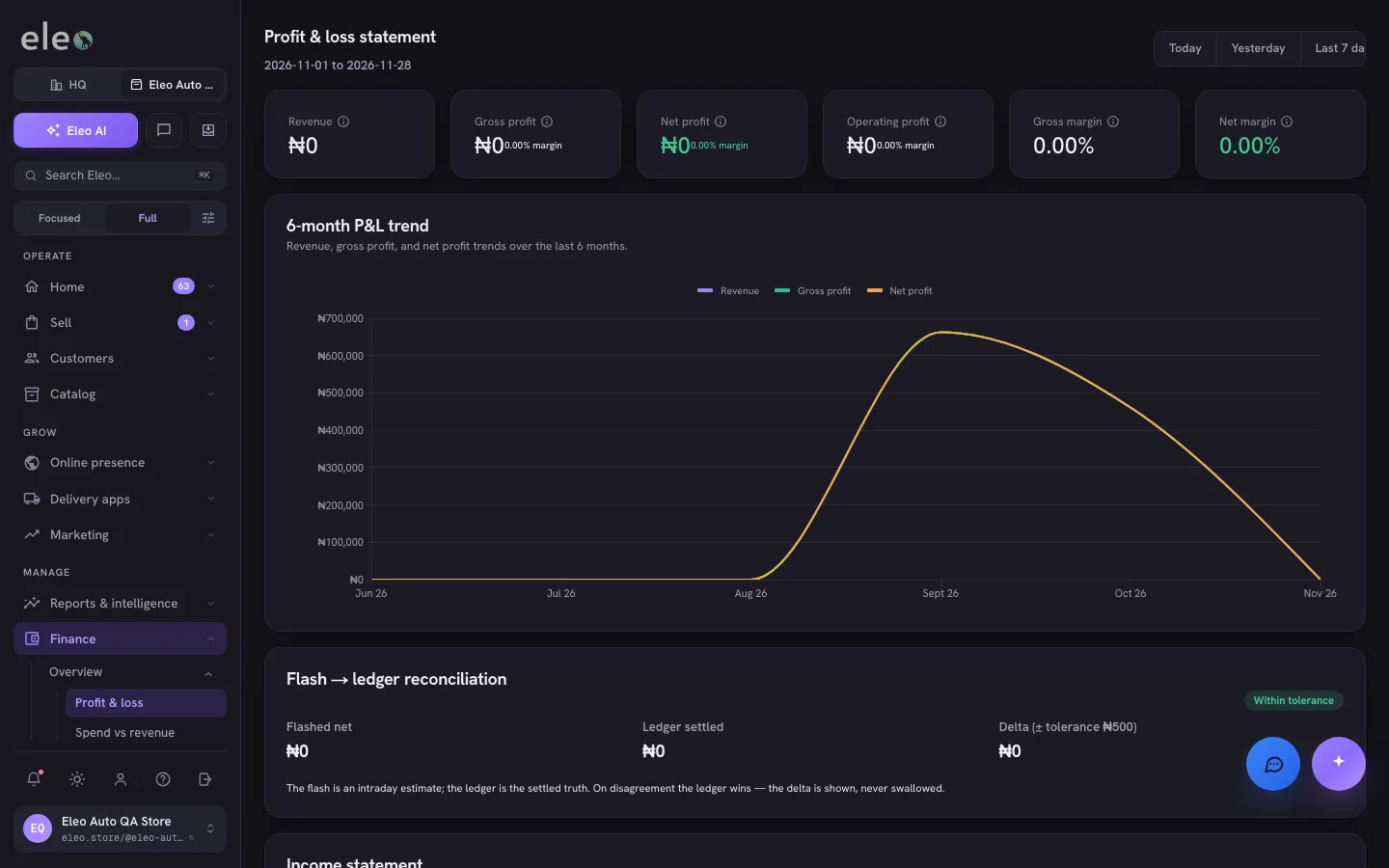
A real Eleo screen, from a demo store.
Received deliveries update what each ingredient cost you, with shipping and duties included. When a supplier puts prices up, the next batch shows it.
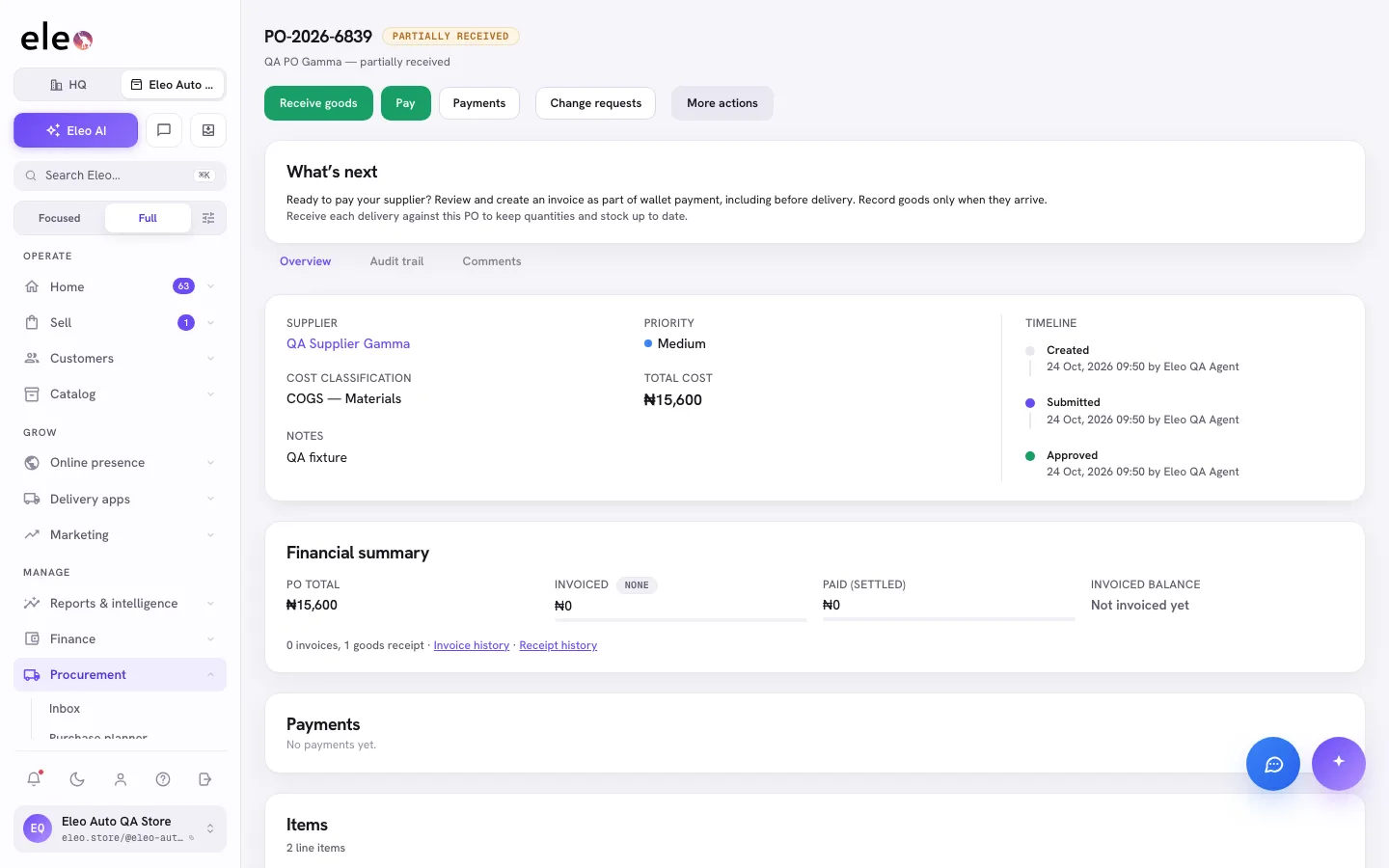
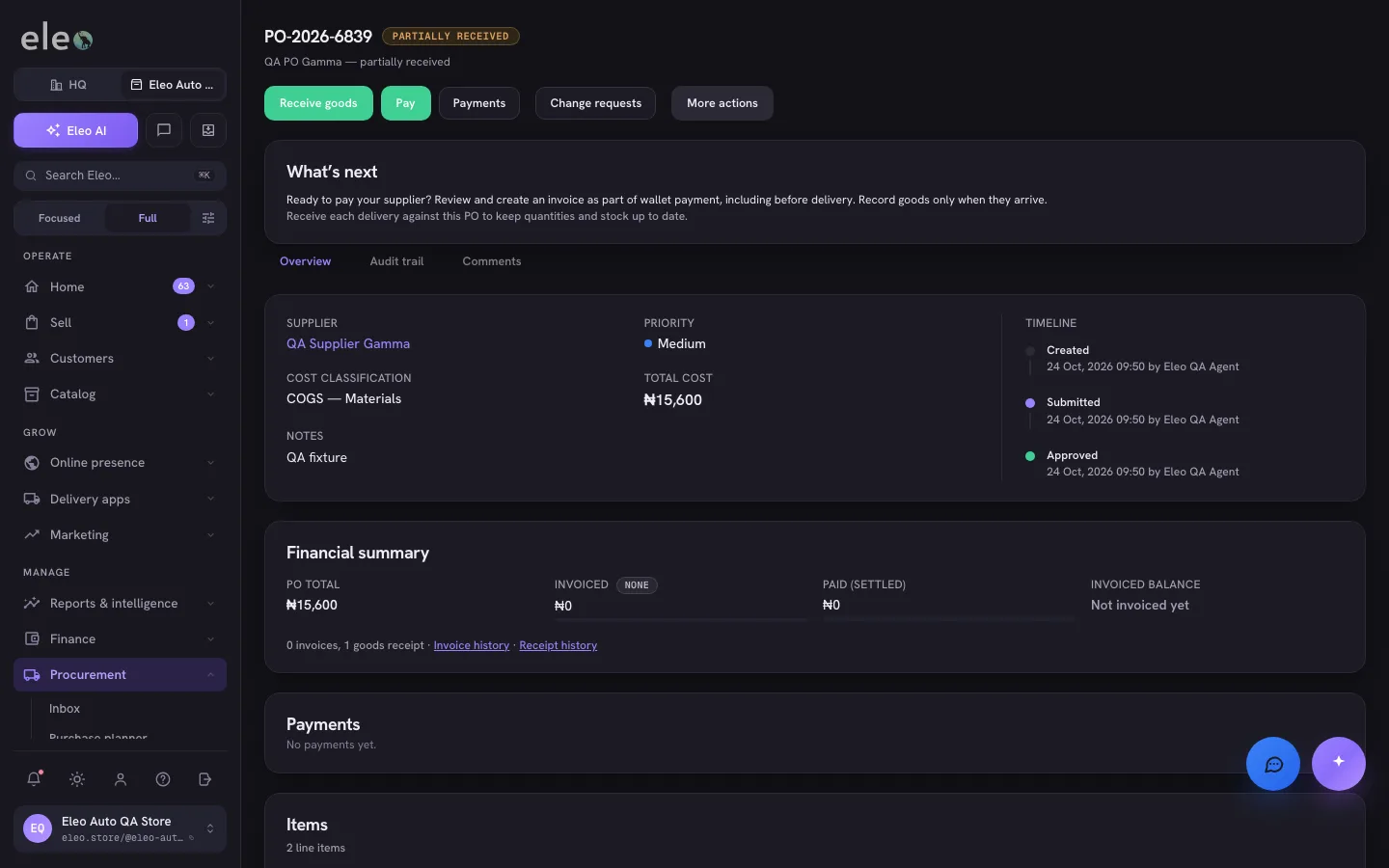
A real Eleo screen, from a demo store.
04 — Who it is for
Businesses that found a full manufacturing system too heavy for their size, and a till too light for what they do.
05 — What to know
Recipes, batches, costing, stock, supplier orders and your accounts work in every country. Wallet, payouts and the Eleo Marketplace are live in Nigeria today. Availability varies by country.
06 — Questions
Eleo is one system where production, stock, supplier orders, the till and your accounts already share the same records. You set it up yourself: import your products, write your recipes and receive your first delivery. The pricing page lists what each plan includes, at one published price per store.
Yes. When batch tracking is on, each finished batch records which ingredient batches went into it, with its own number and use-by date, so you can follow a problem forwards or backwards.
No. Upload a CSV or Excel sheet, or an export file from Square, Shopify, Loyverse or Bumpa, and your products come across. Recipes are then written against those products.
Yes. Labour comes from the time a recipe takes and the rate you set, and overheads from the rate you choose. Both are added to the cost of each batch with ingredients and waste.
In the US, Canada, the UK and the EU, tax rates come set up. In other countries, including Australia, you enter your own rates once and Eleo applies them. Eleo gives you and your accountant the figures; it does not file your return.
Yes. Record a work order as done outside, send the materials out and receive the finished goods back. Stock and cost follow both ways.
07 — Part of the whole
Import your products, write one recipe and run your first batch.